
"soil requirements"
4000 article(s) found
Panama Carmen Boutique Coffee Estate
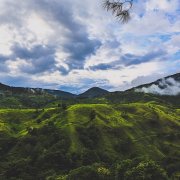
The best way to harvest fine coffee beans is to use manual harvesting. That is, only ripe coffee fruits are picked to prevent coffee fruits with inconsistent maturity from being picked at the same time. Fine coffee requires frequent and careful hand picking during harvest because underripe and overripe fruits affect the balance and stability of coffee flavor. Carmen Manor Coffee is a family-run coffee shop

Planting conditions, Environmental yield and quality of Coffee trees
Planting conditions, yield and quality of coffee tree transplanting seedlings: standard of transplanting seedlings: after the seeds are unearthed, the cotyledons have spread to the true leaves and the seedlings have not yet grown, because at this time, the seedlings have begun to work on the first or second round of lateral roots, and the growth is faster after transplanting seedlings, and before transplanting, the sand bed is drenched with water first. When raising seedlings, protect the root system as far as possible, and seedlings should be cut as soon as possible. And pay attention to keep the roots of the seedlings moist. Plant line spacing according to product

Introduction to the Fire Phoenix Manor in the Western Valley of Costa Rica
There are many excellent producing areas in Costa Rica, and the high-quality producing areas of Costa Rica have a common understanding of quality, that is, it requires the use of mature coffee fruits to ensure the production of high-quality coffee. Generally speaking, a large amount of water is used in the post-processing of picked coffee fruit, but the advanced production equipment in Costa Rica saves the use of water resources to the greatest extent.

Growing conditions of coffee
Coffee can not be grown in any environment, because it is originally a plant growing in a tropical rain forest. In systematic development, coffee forms the habit of calm wind, cool, shaded or semi-shaded and humid environment.

Coffee knowledge-- Coffee cultivation
Coffee can not be grown in any environment, because it is originally a plant growing in a tropical rain forest. In systematic development, coffee forms the habit of calm wind, cool, shaded or semi-shaded and humid environment. Therefore, coffee has strict requirements on planting conditions. We call the strips on both sides of the equator, between latitudes 25 degrees south and north, suitable for coffee growth as coffee belts. 1. Temperature. Yes

Can coffee trees be planted at home? let's first understand the whole process of coffee beans from planting to picking!
Professional coffee knowledge exchange more information about coffee beans Please follow the coffee workshop (Wechat official account cafe_style) what are the fruits and seeds of coffee? Do you want to plant coffee trees in your own home when the coffee beans turn out? First, let's take a look at the whole process of coffee beans from planting to picking: the growth process of coffee is from seeds (or cuttings, grafting) to germination at the seedling stage.

Carmen Manor semi-washing treatment Panamanian boutique coffee New World coffee beans
Carmen Manor Coffee is a coffee estate dominated by the family. The family has long grown coffee under the principle of providing high-quality coffee and protecting the environment. Efrain and Carmen Franceschi began growing Arabica coffee varieties on their estate in 1950. Today, Carmen Manor single processing plant produces about 1200 bags (60 kg each) of unique high-quality coffee beans every year!

Introduction to the Flavor and Price characteristics of Santa Rita Coffee Bean in Colombia
Introduction to Colombian Coffee Manor in 1815, Bolivar envisioned in the letter from Jamaica that when South America was liberated from Spanish colonial rule, New Granada and Venezuela should form a country, named Colombia. In August 1819, Bolivar's Patriotic Army defeated the Spanish colonial army at the Battle of Boyaca and liberated Bogota. So
Advantages and disadvantages of organic coffee. Will organic coffee beans be better?
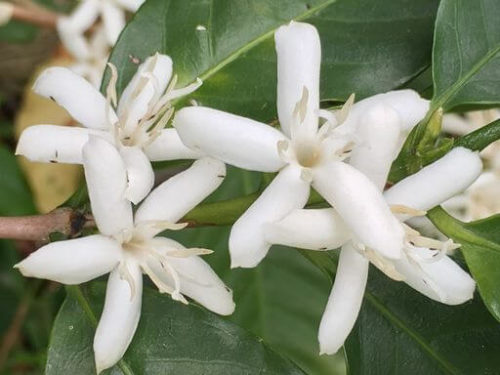
For more information on coffee beans, please follow the coffee workshop (Wechat official account cafe_style). People's views on organic coffee are very polarized. For those in favor of organic coffee, organic production is more helpful to the environment. For those who are against organic, it may be mentioned that organic planting is inefficient and the certification process is expensive, as well as chemical residues in the baking process.

Introduction to the Regional treatment method of Santa Rita Coffee Bean in Colombia
Columbia Santa Rita Coffee Bean Flavor characteristics Manor area treatment method for growing coffee also requires daylight and proper shade, which is most suitable for planting on fertile soil or volcanic ash soil. Therefore, the origin of coffee is widely distributed in South America, Central America, the West Indies, Asia, Africa, Arabia, the South Pacific and Oceania. Such as Ethiopia and Tanzania in Africa

Introduction to the characteristics of taste and flavor of Pu'er coffee. How much is Pu'er coffee? is Pu'er coffee good?
Professional coffee knowledge exchange more coffee bean information Please follow the coffee workshop (official account cafe_style of Wechat) when it comes to Pu'er, people's first reaction is mostly tea. But in fact, in addition to tea, coffee is also one of the very important local agricultural products, regardless of history or quality, are worth talking about. The history of coffee cultivation in Yunnan can be traced back to hundreds of years ago. It is said that at that time
The dark side of coffee that you don't know.
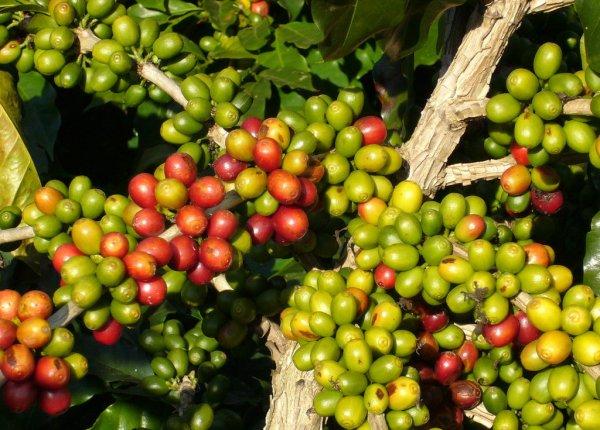
Seemingly humble coffee beans are actually one of the most actively traded commodities in the world. Just look at the coffee consumption statistics in the United States. According to a 2015 Gallup poll, 64% of Americans drink at least one cup of coffee a day, an average of 2.7 cups a day. The United States imports about 127000 tons of raw coffee beans every year, and the annual per capita consumption of coffee in the United States exceeds 4 kilograms. For most

What are the benefits of Arabica coffee beans? Can Arabica coffee beans lose weight?
Professional coffee knowledge exchange more coffee bean information please follow coffee workshop (Wechat official account cafe_style) Arabica Arabica is a representative variety of origin in Ethiopia, it is also produced in South Africa, Africa, Asia and other countries, accounting for 70% of the world's coffee production. 75%. Arabica is very strict about the living environment. It needs to grow at a higher altitude.

Introduction to the characteristics of manor flavor and taste in the original producing area of Costa Rican Yerzaro boutique coffee beans
There are many excellent producing areas in Costa Rica, and the high-quality producing areas of Costa Rica have a common understanding of quality, that is, it requires the use of mature coffee fruits to ensure the production of high-quality coffee. Generally speaking, a large amount of water is used in the post-processing of picked coffee fruit, but the advanced production equipment in Costa Rica saves the use of water resources to the greatest extent.

The planting environment and natural climate of coffee trees
Coffee belt: coffee can not be grown in any environment, because it is originally a plant growing in a tropical rain forest, and in phylogeny, it forms the habit of requiring calm wind, cool, shaded or semi-shaded and humid environment. We call the strips on both sides of the equator between latitudes 25 degrees south and north suitable for the growth of coffee trees as coffee belts. Temperature: the requirement for temperature varies with the species of cultivation, small

Characteristics of Latin American coffee beans manor flavor and taste-an introduction to the characteristics of coffee beans from three producing areas
Characteristics of Latin American coffee beans manor flavor and taste-the characteristics of coffee beans from three producing areas introduce that growing coffee also requires daylight and proper shade, which is most suitable for planting on fertile soil or volcanic ash soil. Therefore, the origin of coffee is widely distributed in South America, Central America, the West Indies, Asia, Africa, Arabia, the South Pacific and Oceania. Such as Ethiopia in Africa,

Where is the growing area with coffee beans?
Coffee can not be grown in any environment, because it is originally a plant growing in a tropical rain forest. In systematic development, coffee forms the habit of calm wind, cool, shaded or semi-shaded and humid environment. Therefore, coffee has strict requirements on planting conditions. We call the strips on both sides of the equator, between latitudes 25 degrees south and north, suitable for coffee growth as coffee belts. 1. Temperature. Yes

Coffee growing conditions Fine coffee Learn coffee basics
Coffee belt: coffee can not be grown in any environment, because it is originally a tropical rainforest environment of plants, in the development of the system, the need for calm wind, warm, shade or semi-shade and humid environment habits. Therefore, coffee has strict requirements for planting conditions. We call the strip of area on both sides of the equator, between 25 degrees north and south latitude, suitable for coffee growth, coffee belt. 1、

Cultivation techniques of Coffee History of Botany Coffee roasting
The cultivation technology editor requires that the origin of coffee tree [4] is in Ethiopia in Africa. In botany, coffee trees belong to the evergreen trees of the subgenus Rubiaceae, and coffee beans, commonly known as coffee beans, are actually the seeds of the fruit of coffee trees. They are called coffee beans only because they are shaped like beans. Climate is the decisive factor for coffee cultivation. Coffee trees are only suitable for growing in the tropics or
Basic knowledge of boutique coffee conditions for planting coffee trees
Coffee belt: coffee can not be grown in any environment, because it is originally a plant growing in a tropical rain forest, and in phylogeny, it forms the habit of requiring calm wind, cool, shaded or semi-shaded and humid environment. We call the strips on both sides of the equator between latitudes 25 degrees south and north suitable for the growth of coffee trees as coffee belts. Temperature: the requirement for temperature varies with the species of cultivation, small